Escalators in Dubai: A Complete Guide to Installation, Maintenance & Specifications for Malls, Hotels & Transit Hubs
Dubai is home to some of the world's most ambitious commercial and hospitality developments — from colossal retail destinations like Dubai Mall and Mall of the Emirates to world-class airports, five-star hotels, and busy metro stations. Connecting these multi-level spaces efficiently and safely is a critical engineering challenge, and escalators remain the single most effective solution for high-volume pedestrian flow across multiple floors.
Whether you are a property developer, contractor, facilities manager, or architect planning a new build or refurbishment in the UAE, this guide covers everything you need to know about commercial escalators in Dubai — from specification and procurement to installation requirements and ongoing maintenance.
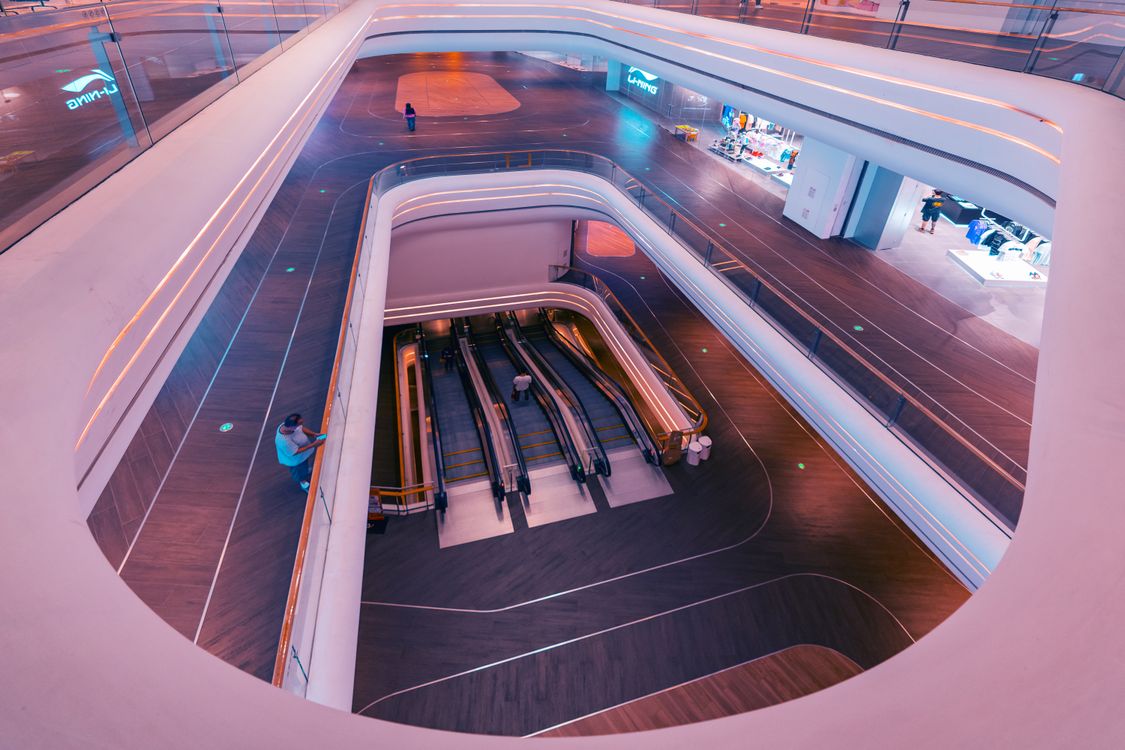
Why Escalators Are Essential for Dubai's Commercial Buildings
In high-footfall environments, escalators outperform lifts on one key metric: continuous throughput. A single modern escalator can move up to 8,000 passengers per hour, making them indispensable in settings where queues and bottlenecks would directly impact revenue, safety, or guest experience.
Dubai's real estate landscape makes escalators particularly relevant across several sectors:
- Retail megamalls: Dubai has more shopping mall floor space per capita than almost any city on earth. Multi-level malls depend entirely on escalators to drive vertical foot traffic between anchor stores, food courts, and entertainment zones.
- Metro and transit hubs: Dubai Metro stations, RTA bus interchanges, and the Expo City transit network all rely on heavy-duty transit-grade escalators designed for continuous 24/7 operation.
- Hotels and hospitality: Luxury hotels, convention centres, and integrated resorts use escalators to elegantly move guests between lobbies, conference levels, and entertainment decks without interrupting the guest experience.
- Airports: Dubai International Airport and Al Maktoum International Airport are among the busiest in the world. Escalators in these facilities must meet the strictest international aviation and safety codes.
- Commercial towers and mixed-use developments: In large podium-level retail bases attached to residential or office towers, escalators handle the public-facing movement while lifts serve the upper floors.
Types of Commercial Escalators Available in Dubai
Not all escalators are the same. The right type depends on your building layout, available floor space, expected passenger volumes, and aesthetic requirements.
Parallel Escalators
The most common configuration for retail environments. Parallel units run side-by-side in opposite directions on the same footprint, making them space-efficient and visually balanced. They are ideal for open atrium layouts in shopping centres and hotel lobbies.
Crisscross (Crossing) Escalators
In this layout, up-and-down escalators cross each other in a scissor or X-pattern as they travel between floors. Crisscross escalators are highly space-efficient and are often chosen when floor space is limited, such as in metro stations or narrow floor plates.
Outdoor and Weather-Resistant Escalators
Dubai's extreme heat and occasional humidity demand special consideration for outdoor escalator installations. Outdoor-rated units are engineered with stainless steel balustrades, waterproof electrical systems, UV-resistant components, and enhanced lubrication systems designed to perform reliably in temperatures exceeding 45°C. These are commonly used in open-air retail promenades, waterfront developments, and pedestrian bridges.
Heavy-Duty Transit Escalators
Designed for the punishing demands of metro stations, airports, and bus terminals, transit-grade escalators are built to operate continuously around the clock. They feature reinforced step chains, heavy-gauge steel structures, and high-speed motors, and must comply with international transit standards such as EN 115 and ASME A17.1.
Key Escalator Specifications to Understand Before Purchasing
When specifying escalators for a project in Dubai, several technical parameters will determine the performance, cost, and compliance of your installation. Understanding these upfront helps avoid costly redesigns or delays.
Rise Height
Rise height refers to the vertical distance the escalator travels between floors. This directly determines the overall length of the unit and has a significant impact on cost and civil works requirements. Standard floor-to-floor heights in Dubai commercial buildings typically range from 4.0m to 6.0m for retail podiums and up to 8.0m or more in high-ceiling atrium spaces.
Inclination Angle
Commercial escalators are manufactured in either 30° or 35° inclination angles. The 30° angle is preferred in most retail and hospitality settings as it offers a more comfortable, gradual rise. The 35° angle is more compact and better suited to space-constrained areas like metro stations, though it is not permitted in some public-building applications under UAE regulations.
Step Width
Step widths are standardised at three sizes: 600mm (single-file), 800mm (standard retail), and 1,000mm (wide, high-capacity). For most shopping malls and hotels in Dubai, 800mm is the standard specification. Transit and airport applications typically specify 1,000mm to accommodate luggage and double-file passenger flow.
Speed
Standard escalator speed is 0.5 m/s for retail and commercial applications. Transit-grade escalators may operate at 0.65 m/s. Higher speeds increase throughput but require wider safety landing zones at the top and bottom of each unit.
Passenger Capacity
At 0.5 m/s with 800mm step width, a single escalator can theoretically move up to 6,750 persons per hour. Real-world capacity is typically planned at 60–70% of theoretical maximum to account for variable usage patterns. For high-footfall environments, always model peak-hour traffic before finalising quantities and configurations.
Escalator Installation Requirements in the UAE
All escalator installations in Dubai and the broader UAE must comply with Dubai Municipality (DM) regulations and applicable international standards. The key standards referenced in the UAE market are EN 115 (European Safety Code for Escalators and Moving Walks) and ASME A17.1/CSA B44 (North American Safety Code).
Key installation requirements include:
- Structural pit and landing zones: Civil works must include precisely engineered upper and lower pits to house the escalator drive and return mechanisms. Landing plate dimensions, truss support beams, and clearance heights are all defined at the design stage and cannot be modified after civil works are completed.
- Electrical supply: Escalators in the UAE operate on a 380–415V, 50Hz three-phase supply. The supply must include a dedicated isolator and earthing as per DEWA and IEC standards.
- Fire compliance: Escalator installations in enclosed buildings must incorporate approved fire shutter or sprinkler systems per Dubai Civil Defence requirements, particularly in shopping mall void spaces.
- Accessibility: All public escalator installations must comply with UAE Federal Law No. 29 of 2006 on the Rights of People with Disabilities, which requires companion lifts or alternative accessible routes wherever escalators are the primary vertical circulation element.
- Commissioning and handover: Prior to being put into service, escalators in Dubai must pass a statutory inspection and load test carried out by an accredited third-party inspection body approved by Dubai Municipality.
Working with an experienced supplier who understands UAE regulatory requirements from day one significantly reduces the risk of non-compliance, delays, and cost overruns. Learn more about Fuji Lifts Global's expertise in UAE vertical transportation projects.
Escalator Maintenance in Dubai: What Building Owners Need to Know
In Dubai's climate, escalator maintenance is not optional — it is a statutory requirement and a practical necessity. The combination of high ambient temperatures, fine desert dust, heavy passenger loads, and continuous operation creates demanding conditions for mechanical components.
Routine Maintenance Schedule
A standard escalator maintenance programme in the UAE typically includes monthly lubrication of step chains, handrail drives, and bearings; quarterly inspection of step demarcation lighting, comb plates, and safety switches; and biannual inspection of the drive motor, brake system, and structural components. All maintenance activities should be recorded in a site log for regulatory compliance.
Annual Inspection and Load Testing
Dubai Municipality requires an annual statutory inspection of all escalators in public buildings. This inspection verifies that safety devices — including overspeed governors, anti-reversal brakes, and emergency stop buttons — are fully functional. A formal load test may also be required following any major repair or component replacement.
Common Warning Signs to Watch For
Facilities managers should instruct maintenance staff to watch for the following indicators that an escalator requires attention:
- Unusual vibration, grinding, or clicking noises during operation
- Visible wear or damage to step treads or risers
- Handrail speed that is noticeably faster or slower than step speed
- Frequent nuisance trips on safety devices
- Excessive heat from the motor room or drive area
- Step gaps that exceed 6mm at the comb plate
Addressing these signs early prevents costly breakdowns and ensures the continued safety of your passengers. If you are evaluating escalator options for a new project or looking to refurbish existing units, visit Fuji Lifts Global's homepage to explore our full product range.
Factory-Direct Escalator Supply: The Procurement Advantage
In the UAE market, escalators have historically been procured through local agents and distributors, which adds significant cost at every layer of the supply chain. For project developers and main contractors working to tight margins and compressed timelines, factory-direct procurement from a manufacturer is a compelling alternative.
By sourcing escalators directly from the manufacturing facility, project teams gain several advantages:
- Lower unit cost: Eliminating distributor margins typically reduces equipment cost by 15–25% on a like-for-like basis.
- Custom specifications: Factory-direct orders can be manufactured to exact project specifications — non-standard rise heights, specific finish colours, bespoke balustrade designs — without the premium that local agents typically charge for customisation.
- Shorter lead times: Dealing directly with the manufacturer removes communication delays. Design queries, shop drawing approvals, and production scheduling are resolved more quickly.
- Spare parts availability: Long-term parts supply is guaranteed when sourcing from the OEM rather than relying on a local agent who may change brand partnerships.
Why Choose Fuji Lifts Global for Your Escalator Project in Dubai
Fuji Lifts Global is a direct-from-factory manufacturer of escalators and moving walkways with over 25 years of manufacturing experience and a production capacity of more than 1,600 units annually. With our Middle East sales office based in Dubai, we combine factory-direct pricing with local project support and technical expertise in UAE regulatory requirements.
Our escalator range covers the full spectrum of commercial applications: standard retail and hospitality escalators, heavy-duty transit escalators, and outdoor-rated units engineered for UAE climatic conditions. All units can be manufactured to bespoke specifications to match your architectural design intent.
Whether you are tendering a new shopping mall development, upgrading escalators in an existing building, or specifying vertical transportation for a mixed-use tower project, our team can provide detailed technical proposals, competitive pricing, and end-to-end project support from factory to commissioning.
Contact Fuji Lifts Global today to discuss your escalator requirements: call us at +971 50 824 5473 or email [email protected]. Our technical team is ready to help you specify the right escalator solution for your project in Dubai, Abu Dhabi, Sharjah, or anywhere across the UAE.
